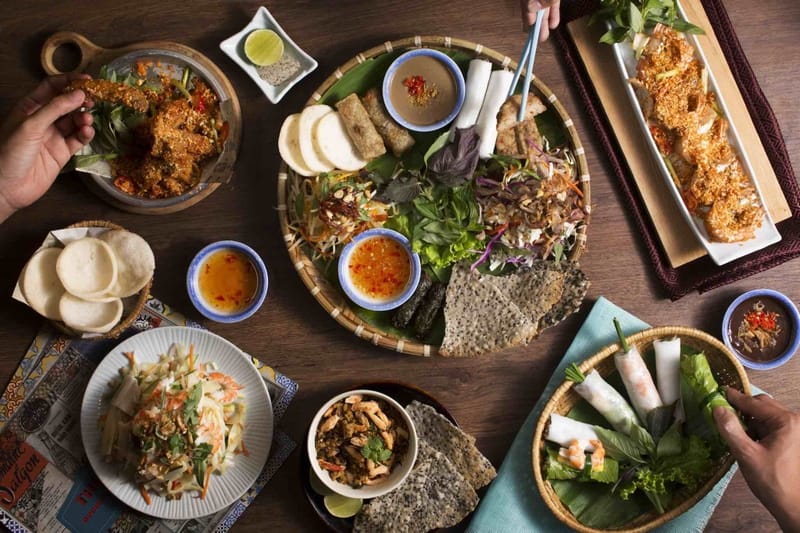
If Northern cuisine emphasizes refinement and elaboration, and Central cuisine is rich in flavor, Southern Vietnamese culinary culture carries a unique simplicity and rustic charm.
The “Seasonal” Style of Southern Cuisine
In the South, rivers rich in alluvium and networks of canals and streams make seafood abundant year-round. Shrimp, fish, crab, and other freshwater delicacies are always plentiful. During the flood season, locals enjoy seasonal specialties such as Bông súng mắm kho (water lily braised in fermented fish sauce) and bún nước lèo (noodle soup with savory fish broth)
Diversity in Southern Culinary Culture
Besides rustic dishes that captivate diners, Southern cuisine’s appeal comes from the blending of many culinary traditions. Southern cuisine is a synthesis of Northern and Central culinary culture, combined with influences from Khmer culture.
Dishes from other regions, when brought into the South, have been adapted in many ways. For example, Northern-style rice noodles (bún) become thicker and starchier in the South and are called bánh canh. Southern bánh canh is also very diverse, often served with chicken, shrimp, crab, squid, or pork hock.
Northern migrants brought phở to the South, and the dish began to change over time. Especially in Ho Chi Minh City, beef in phở is sold in six styles—well-done, rare, brisket, fatty brisket, tendon, or meatballs—according to customer preference. Southern phở is served with sweet soy sauce, red chili sauce, lime, fresh chili, sawtooth herb, Thai basil, bean sprouts, and thinly sliced onions. The broth is usually less clear than Northern phở and has a sweeter, richer, and more savory flavor.
The “Intense” Taste of Southern People
Many people say that Southerners prefer sweet flavors in their food, almost adding sugar to everything. But have you ever wondered if Southerners truly only eat sweet dishes?
Since ancient times, when their ancestors reclaimed wild lands, Southerners’ taste was considered very “intense.” For salty flavors, they used pure fish sauce; for kho quẹt (Caramelized pork dip), they cooked it salty enough to form a layer of salt; for spiciness, they used extremely hot chili, even fiery hot chili peppers.
Historically, Southerners developed such a taste because reclaiming the land required hard labor and an extremely harsh, intense life. Today, Southern palates have softened somewhat, with milder dishes, but they still retain culinary traces from the past